How AI is Shaping Mobile App Development in 2025
Imagine opening a shopping app and seeing a list of recommendations that feel like they were handpicked just for you. Or playing a mobile game where the enemies learn from your tactics and change their approach in real time. Artificial intelligence is making all of this possible, turning ordinary apps into smart, responsive, and deeply personalized experiences.
Artificial intelligence is not just a tool for developers. It is a game changer that is shaping the future of mobile applications. From enhancing security to automating customer service, artificial intelligence is making apps more intelligent, more efficient, and more useful in everyday life.
Wondering how much your project will cost?
Key Ways AI is Changing Mobile Apps
1. Personalized User Experience
Apps that anticipate your needs feel like magic, but it is all thanks to artificial intelligence. Streaming services suggest shows, shopping apps recommend products, and social media curates posts based on your behavior.
AI goes beyond analysis as it adapts in real time. From interfaces that adjust to your habits to keyboards that predict your next word, AI makes interactions smoother and more intuitive.
2. AI-Powered Chatbots and Voice Assistants
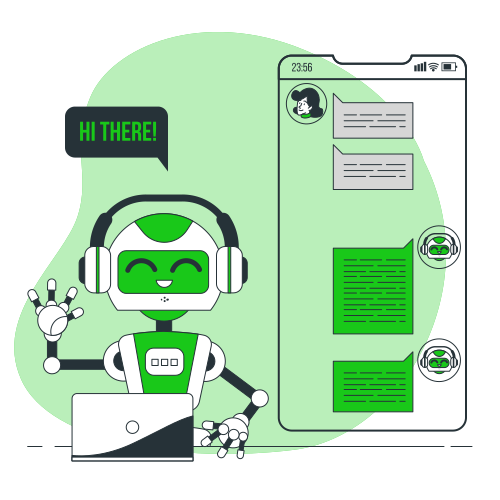
Customer service has moved beyond frustrating menus and long waits. AI chatbots now provide instant, human-like responses.
Voice assistants like Siri and Google Assistant manage schedules, control devices, and make reservations. With each interaction, they better understand language and context.
3. Predictive Analytics and Smart Recommendations
Artificial intelligence predicts what users need next.
E-commerce apps suggest products, fitness apps plan workouts, and streaming platforms recommend movies. These predictions keep apps ahead, making searches effortless.
4. Enhanced Security and Fraud Detection
Security threats keep evolving, and artificial intelligence helps apps stay ahead. Facial recognition, fingerprint scanning, and fraud detection enhance security by monitoring activity in real time.
In social media and messaging apps, artificial intelligence detects spam, phishing, and harmful content, making apps safer for users.
5. Automated Testing and Faster App Development
Developing an app takes time, especially with testing and debugging. Artificial intelligence automates these processes.
Artificial intelligence tools detect code errors, suggest improvements, and run tests without human intervention. Apps are developed faster and released with fewer bugs and performance issues.
6. AI in Healthcare and E-Commerce Apps
Artificial intelligence is transforming industries beyond technology.
In healthcare, mobile apps help doctors diagnose early, monitor health, and offer virtual therapy. Some analyze symptoms and provide medical advice, reducing hospital visits.
In e-commerce, AI improves shopping with visual search and virtual try-ons. Customers can snap a photo to find similar items, while virtual fitting rooms show how products look before purchase.
7. AI in Gaming and Augmented Reality
Artificial intelligence is transforming gaming. Modern games move beyond scripted responses, allowing non-playable characters to learn and adapt in real time for a more immersive experience.
Augmented reality also benefits from artificial intelligence. Apps like Pokémon GO blend digital content with the real world. As technology advances, these experiences will become even more realistic and engaging.
8. Language Translation
Many modern mobile apps leverage AI and ML to detect and translate languages directly from text or images. With advanced AI integration, users no longer need to manually upload images. Smartphones can now automatically recognize and translate text in real time, even offline. AI-powered models provide faster, more accurate translations and adjust latency to enhance overall translation quality and user experience.
Challenges in AI-Powered Mobile Apps
With great power comes great responsibility, and AI is no exception.
Data privacy is a major challenge. AI relies on vast user data for accuracy, raising security concerns. Developers must ensure transparent data collection and compliance with regulations like GDPR and CCPA.
AI integration is also complex and costly. Not all companies can build AI-driven features from scratch. Training models, collecting quality data, and ensuring smooth performance require significant investment and expertise.
Ethical concerns are another issue. AI reflects the data it learns from, which can lead to bias. Developers must ensure AI-driven apps are fair, unbiased, and inclusive.
Future of AI in Mobile Apps
The future of AI in mobile applications is limitless. Imagine an app that can sense your emotions and adjust its responses accordingly. AI-powered mental health apps are already exploring this, using voice analysis and facial recognition to detect stress levels and provide real-time support.
As AI continues to evolve, we’ll see even deeper integration with IoT (Internet of Things), allowing apps to connect seamlessly with smart home devices, wearables, and even autonomous vehicles. From hyper-personalized experiences to real-time automation, the possibilities are endless.
Conclusion
AI has turned mobile apps into something far beyond just tools—they’re now intuitive, intelligent companions that learn, adapt, and improve over time. Whether it’s making shopping easier, improving healthcare, or creating immersive gaming experiences, AI is at the heart of it all.
As technology advances, AI-driven apps will continue to push boundaries, offering smarter, more personalized, and seamless experiences. We’re only scratching the surface of what’s possible, and the future of mobile app development has never looked more exciting.
+ Explore AI Development at AppsInAi