How does AI automate customer care services?

In today's fast-paced digital landscape, customer care services are undergoing a remarkable transformation, largely driven by Artificial Intelligence (AI). Gone are the days of prolonged hold times and repetitive inquiries; AI is ushering in an era of efficiency and personalization in customer interactions.
Let's delve into how AI is automating customer care services, enhancing experiences for both customers and businesses.
1. Intelligent Virtual Assistants (IVAs)
Unlike simple chatbots, IVAs use natural language processing (NLP) and machine learning to understand context, tone, and intent. They can handle multi-turn conversations, provide personalized support, and even learn from past interactions to improve over time.
Example: A healthcare provider uses an IVA to assist patients with appointment scheduling, prescription refills, and symptom checks. The IVA remembers past interactions, so returning patients don’t have to repeat their medical history every time they call.
2. AI-Powered Chatbots
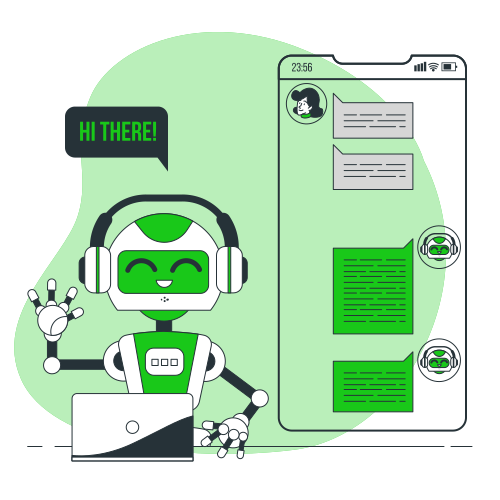
AI chatbots serve as the first touchpoint for businesses, managing inquiries, processing orders, and resolving issues without human involvement.
Example: A telecom provider’s chatbot helps customers check their data usage, pay bills, and reset passwords instantly, reducing call center traffic.
3. AI Voice Support
AI-driven voice assistants are enhancing phone support by recognizing customer intent, understanding emotions, and resolving issues faster. They can answer calls, troubleshoot problems, and route calls to the right department.
Example: A retail company’s AI-powered call system detects frustration in a customer’s voice and prioritizes their call to a human agent for faster resolution.
4. AI for Multilingual Support
AI translation tools allow businesses to provide customer support in multiple languages without hiring multilingual agents.
Example: A global e-commerce company uses AI to translate live chat messages, enabling seamless communication between customers and support teams worldwide.
5. Automated Email and Ticketing Systems
AI-powered systems categorize and prioritize customer emails and support tickets, ensuring faster response times.
Example: An airline uses AI to scan customer emails, detect urgent issues (like flight cancellations), and prioritize them for immediate resolution.
6. AI Agents
Unlike traditional chatbots or IVAs, AI agents don’t just respond to queries, they take action. They can process refunds, update account details, manage subscriptions, and even complete purchases without human involvement.
Example: A travel company’s AI agent helps customers book flights, modify reservations, and process cancellations, all without a human agent stepping in. It can even suggest alternative flights based on real-time availability.
Conclusion
AI is not replacing human agents but enhancing their efficiency. By automating repetitive tasks like data entry and basic inquiries, AI allows agents to focus on complex customer needs that require problem-solving and empathy. This leads to faster resolutions, higher customer satisfaction, and a more streamlined workflow. As AI continues to evolve, businesses can expect even smarter, more personalized customer support that improves engagement and builds stronger customer relationships.